


Your water bill jumps, but your routine has not changed. There is no dripping faucet or puddle to explain it. A hidden water leak may be out of sight behind a wall, beneath flooring, in a crawlspace, or under a concrete slab.
The EPA estimates household leaks waste about 9,400 gallons of water per family each year.
9 Warning Signs of a Hidden Water Leak

One symptom does not confirm a leak.
- Unexplained water use: Compare water volume on recent bills, not just the dollar amount.
- A moving water meter: If its flow indicator moves while fixtures, appliances, and irrigation are off, water may still be flowing.
- Running-water sounds: Listen near bathrooms, kitchens, utility rooms, and walls with plumbing.
- Wall or ceiling stains: New or spreading discoloration can indicate moisture behind the surface.
- Peeling paint or swollen trim: Bubbling paint, lifting wallpaper, or swollen baseboards may indicate dampness.
- Warped or soft flooring: Buckling wood, lifted laminate, or damp carpet can point to nearby moisture.
- Musty odors or mold: An earthy smell or growth in a normally dry area suggests excess moisture, though plumbing is not the only possible cause.
- Warm floor patches: An unusually warm area can signal a hot-water line leak beneath a concrete slab.
- Reduced water pressure: A leak can lower pressure, but a clogged fixture, closed valve, or supply issue can too. Treat it as a clue, not proof.
How to Check for a Leak With Your Water Meter
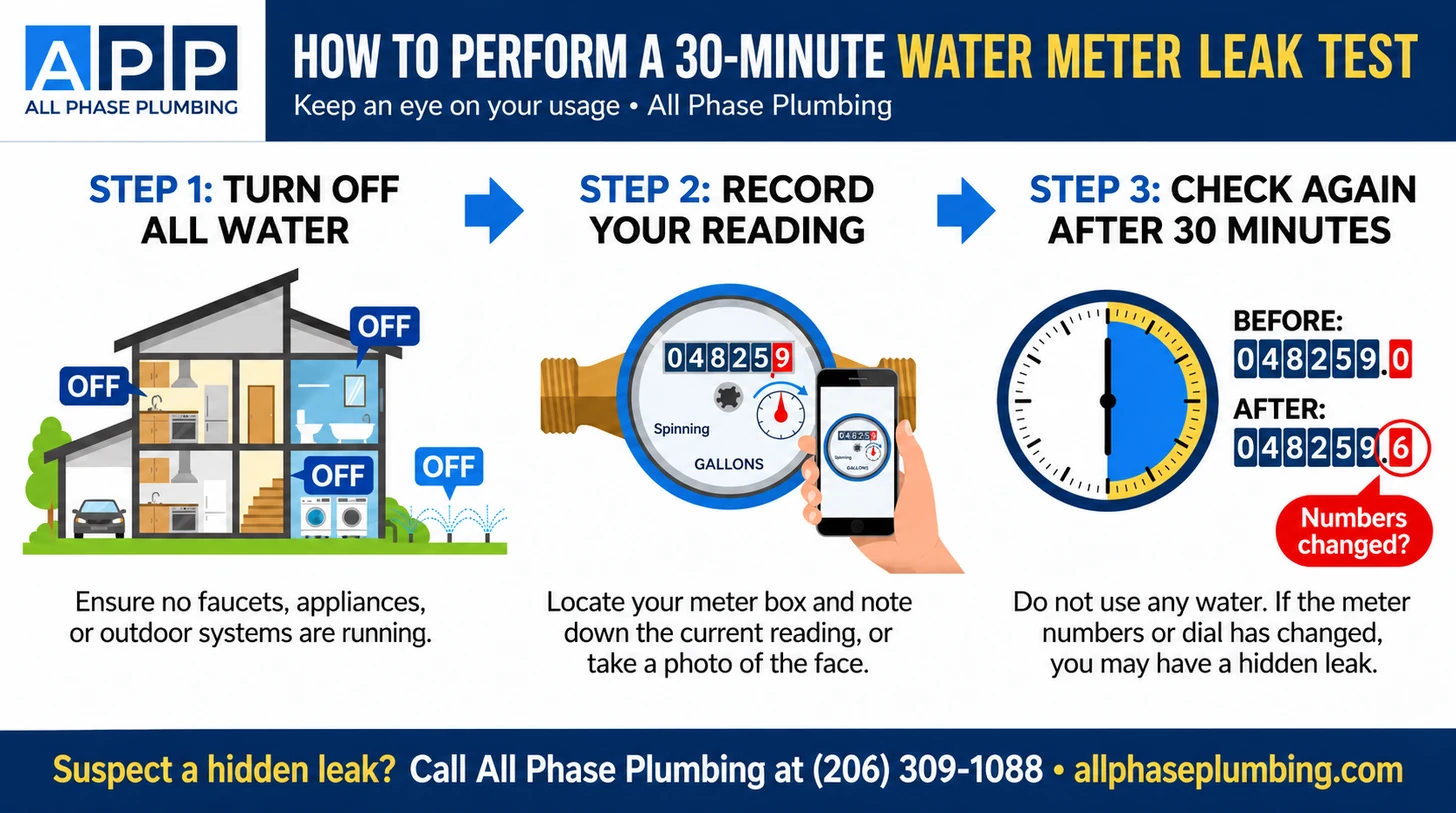
For homes served by Seattle Public Utilities (SPU), the utility recommends a 30-minute meter test. Other providers may use a different process.
- Turn off faucets, appliances, and irrigation. Make sure nobody uses water.
- Find your meter, often in a sidewalk or parking-strip box. Record its reading or flow-dial position.
- Wait 30 minutes without using water, then check again.
The readings should be unchanged. If the dial moves, SPU says a leak may be present. If you can safely reach your home's main shut-off valve, close it and check again. If the meter stops, the leak is likely inside. If it continues, the leak may be in the underground pipe between the meter and building shut-off. Do not force a stuck valve or operate the meter shut-off without utility guidance.
See SPU's leak-check instructions.
Check These Accessible Areas First
Inspect these accessible areas before assuming a pipe is hidden.
- Toilets: Add a few drops of food coloring to the tank and wait 10 minutes without flushing. If color appears in the bowl, water may be passing the flapper. Flush afterward. See our toilet repair service for persistent problems.
- Under sinks: Look for drips, damp cabinet floors, corrosion, or moisture around supply lines.
- Water heaters and appliances: Check visible connections and the floor around the water heater, washing machine, and dishwasher. Do not remove covers or touch electrical parts.
- Outdoor taps and irrigation: Look for dripping hose connections, broken sprinkler heads, or soil that stays wet when the system is off.
The EPA's home maintenance guidance recommends checking fixtures and comparing water use over time.

Why Your Water Bill May Be High Without a Hidden Leak
More laundry, longer showers, extra household members, seasonal irrigation, or a running toilet can increase water use. Compare the current billing period with the same period last year, and check whether the meter reading is actual or estimated.
SPU notes an earlier estimated reading can make a later bill appear higher when actual usage is recorded. If your meter test does not suggest a leak, ask your provider to review the reading and billing period. See its high-bill guidance.
When Should You Call a Plumber?
Arrange an inspection if the meter keeps moving when water is off, dampness returns, or you hear running water without finding its source. Spreading stains, soft flooring, and warm floor patches also deserve attention.
All Phase Plumbing provides leak detection services for suspected leaks in walls, floors, crawlspaces, and underground lines. For signs of a leak beneath a concrete foundation, see our slab leak detection and repair service.
If a pipe bursts or water floods your home, shut off the main valve if safe and accessible. Stay away from electrical equipment near standing water and request urgent plumbing help.
Frequently Asked Questions (FAQ)
Q: Can a hidden water leak increase my water bill?
A: Yes. Water escaping from a pipe, toilet, or connection can pass through the meter even without a visible puddle. The EPA estimates household leaks waste about 9,400 gallons per family each year.
Q: How can I tell if a pipe is leaking inside a wall?
A: Look for stains, bubbling paint, swollen trim, damp areas, musty odors, or unexplained running-water sounds. A meter test can show whether water is flowing, but it cannot locate the leak.
Q: Does homeowners insurance cover hidden water leaks?
A: Coverage depends on your policy and the cause. Washington's Office of the Insurance Commissioner explains that insurers often treat sudden, accidental water damage differently from gradual leaks. Review your policy and ask your insurer what applies.
Need Help Finding a Hidden Water Leak?
Unexplained water use or moisture is worth checking. Call (206) 309-1088 or book leak detection service online to request service in the Greater Seattle area.
Written by the All Phase Plumbing team
Licensed, insured plumbers serving Seattle, Tacoma, and the Puget Sound since 1989. We write about the problems we actually see in local homes.
Available 24/7
Need a plumber right now?
Licensed, insured Seattle plumbers since 1989. Real people answer, day or night.
(206) 309-1088Book online- Upfront pricing
- Same-day service
- Licensed & insured