
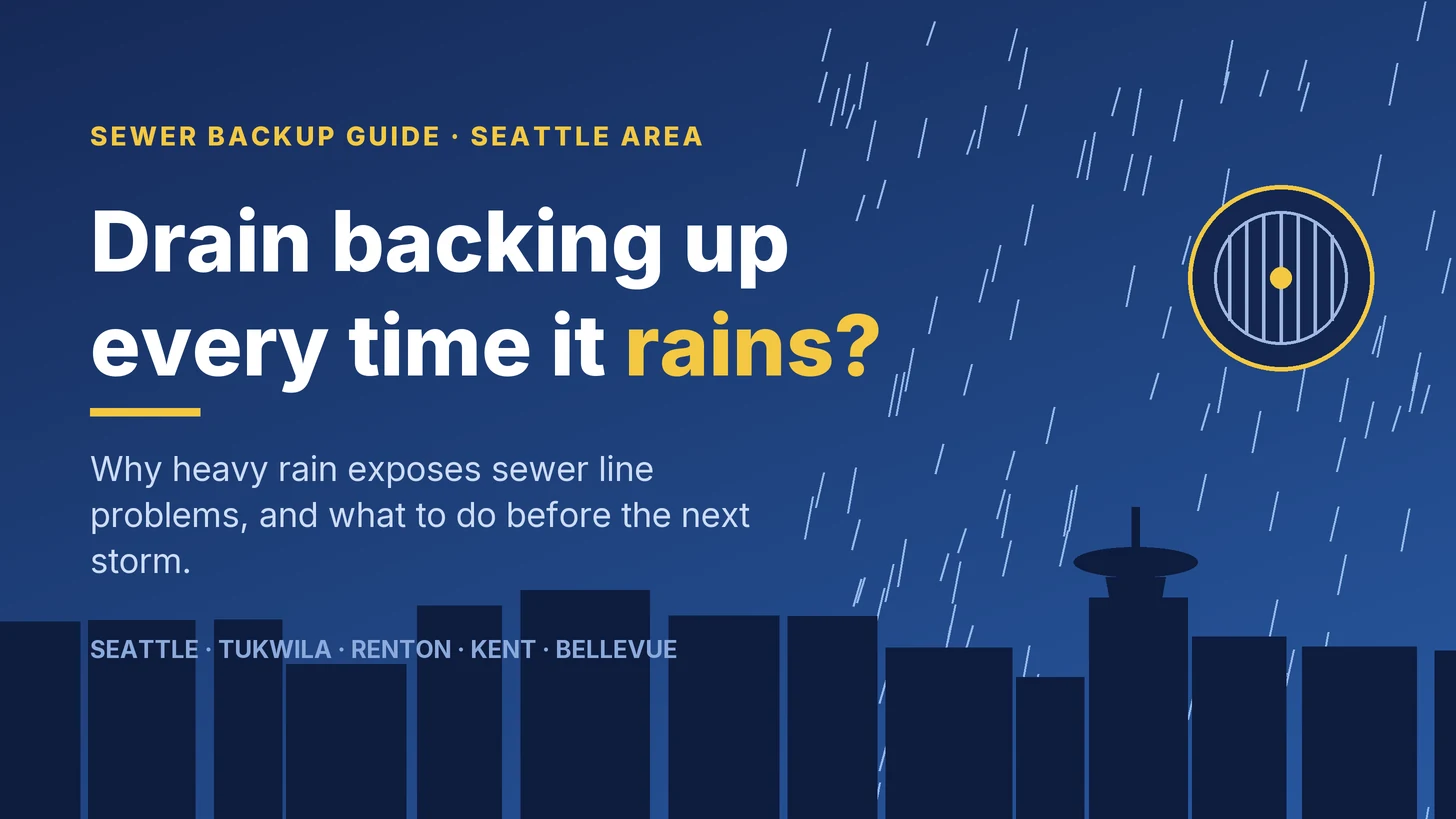
The forecast says rain for the next three days. Nothing unusual for Seattle. Then the basement floor drain starts gurgling, the downstairs toilet rises when someone runs the shower, and by the time the rain lets up, there is water coming back into the house.
If that sounds familiar, the rain probably is not a coincidence. Heavy rainfall can expose drainage problems that have been building for months or even years: older sewer lines, tree roots, and overloaded drainage systems can all contribute to a backup.
Here is what catches many homeowners off guard: a drain backing up during a storm does not automatically mean the city sewer is the problem. Sometimes the blockage is in the private sewer line running from the house to the street. Other times a pipe that has been slowly deteriorating finally reaches the point where it cannot keep up. The important thing is to find out where the problem is before the next storm brings it back.
Why Rain Can Cause a Sewer Backup
Two causes are most common: pressure on the larger sewer system, and a restriction in your own sewer line.
Heavy rainfall can put pressure on older sewer systems
Parts of Seattle still have combined sewer systems, which carry both wastewater and stormwater. In heavy rain those systems can become overloaded, and wastewater may have trouble flowing away from a property. In some situations that contributes to backups in lower-level drains and fixtures. If several neighbors are affected at the same time, report it to your local sewer utility as well.
This is not the explanation for every rain-related backup. If it keeps happening at your home, check whether the private sewer line has a blockage or damage of its own.
Tree roots can block an aging sewer line
Seattle has plenty of mature trees, and their roots are always looking for moisture. Small cracks or loose joints in an older sewer pipe give them a way inside. Once in, roots catch debris and gradually restrict the flow. The pipe may still work most of the time, which is why the problem can go unnoticed until heavy rain adds pressure. Our guide to preventing tree root damage in sewer lines explains how to catch it early.
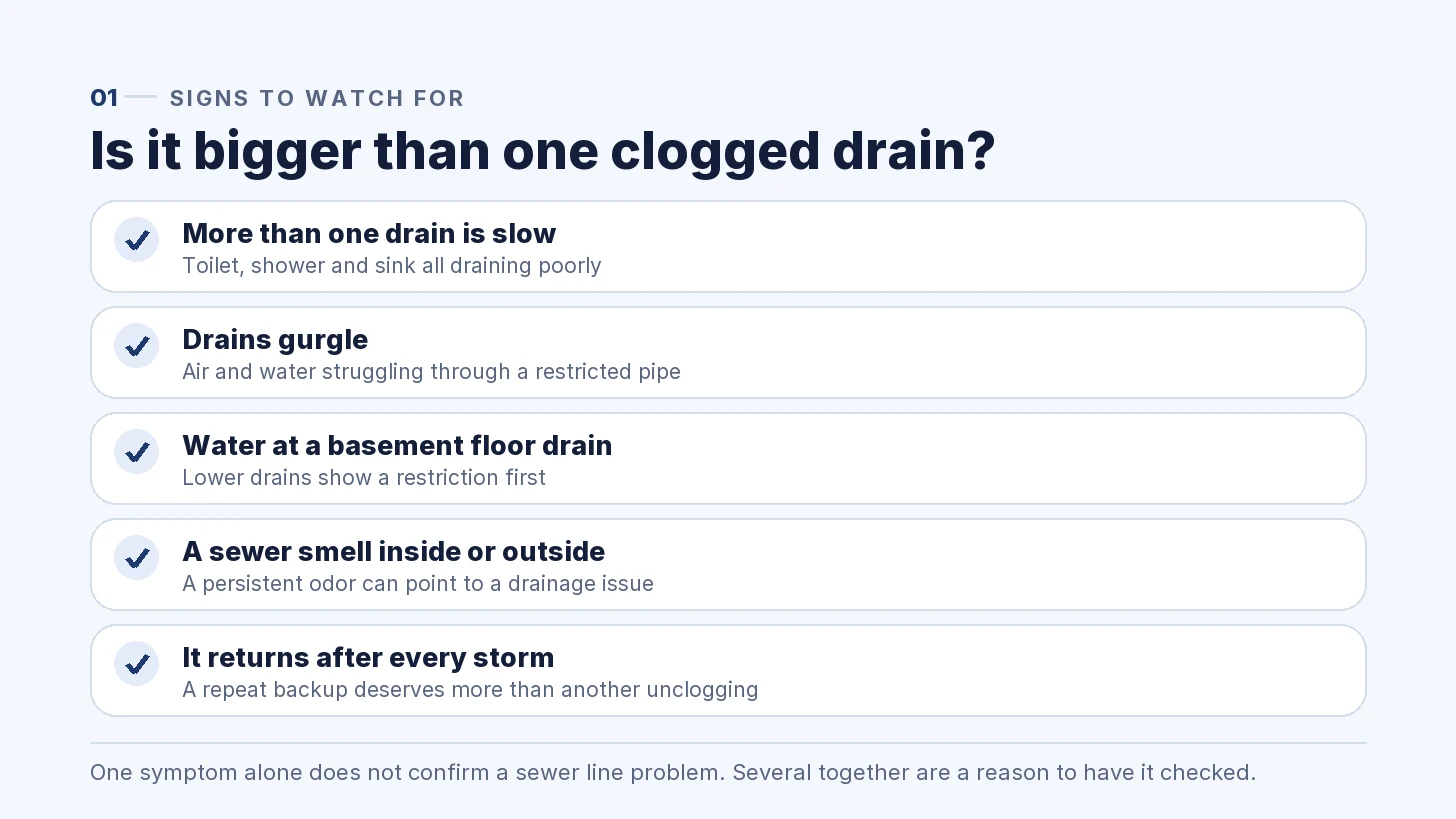
How to Tell If It Is Bigger Than One Clogged Drain
A slow kitchen sink usually points to a local blockage. When several fixtures act up together, the problem may be farther down the drainage system. Watch for these signs:
- More than one drain is slow. If the toilet, shower, and sink all drain poorly, the issue may be in the main sewer line.
- Drains gurgle. Air and water struggling through a restricted pipe make that sound.
- Water comes up through a basement floor drain. Lower drains are often the first place a restriction shows.
- You notice a sewer smell. A persistent odor inside or outside the house can point to a drainage issue.
- The problem returns after every storm. A backup that keeps coming back deserves more than another quick unclogging.
Why Seattle Area Homes Can Be More Vulnerable
The age of a home, the type of sewer pipe, and the trees around the property all make a difference. Older homes in Seattle, Renton, Kent, and Bellevue may have sewer lines that have been in the ground for decades. Over time joints shift, materials wear down, and roots find their way in. That does not mean every older home has a failing sewer line. It means recurring backups should be investigated instead of treated as an ordinary clog every time.
Homes with basements or lower-level plumbing often see the problem first, because the lowest drains are where a restricted line shows itself.
What a Sewer Camera Inspection Can Tell You
When a drain keeps backing up, clearing the water is only part of the job. You also need to know why it happened. A sewer camera inspection lets a plumber look inside the line and see what is restricting the flow. Depending on the pipe, it may show:
- Tree roots growing into the sewer line
- Buildup or debris inside the pipe
- Cracks or damaged sections
- A blockage that keeps returning
- Areas where the pipe is deteriorating
A camera takes the guesswork out of the next step. Instead of assuming the line needs cleaning or repair, the plumber can recommend what the pipe actually needs. Learn more about our sewer services.
Hydro Jetting or Sewer Line Repair: Which Do You Need?
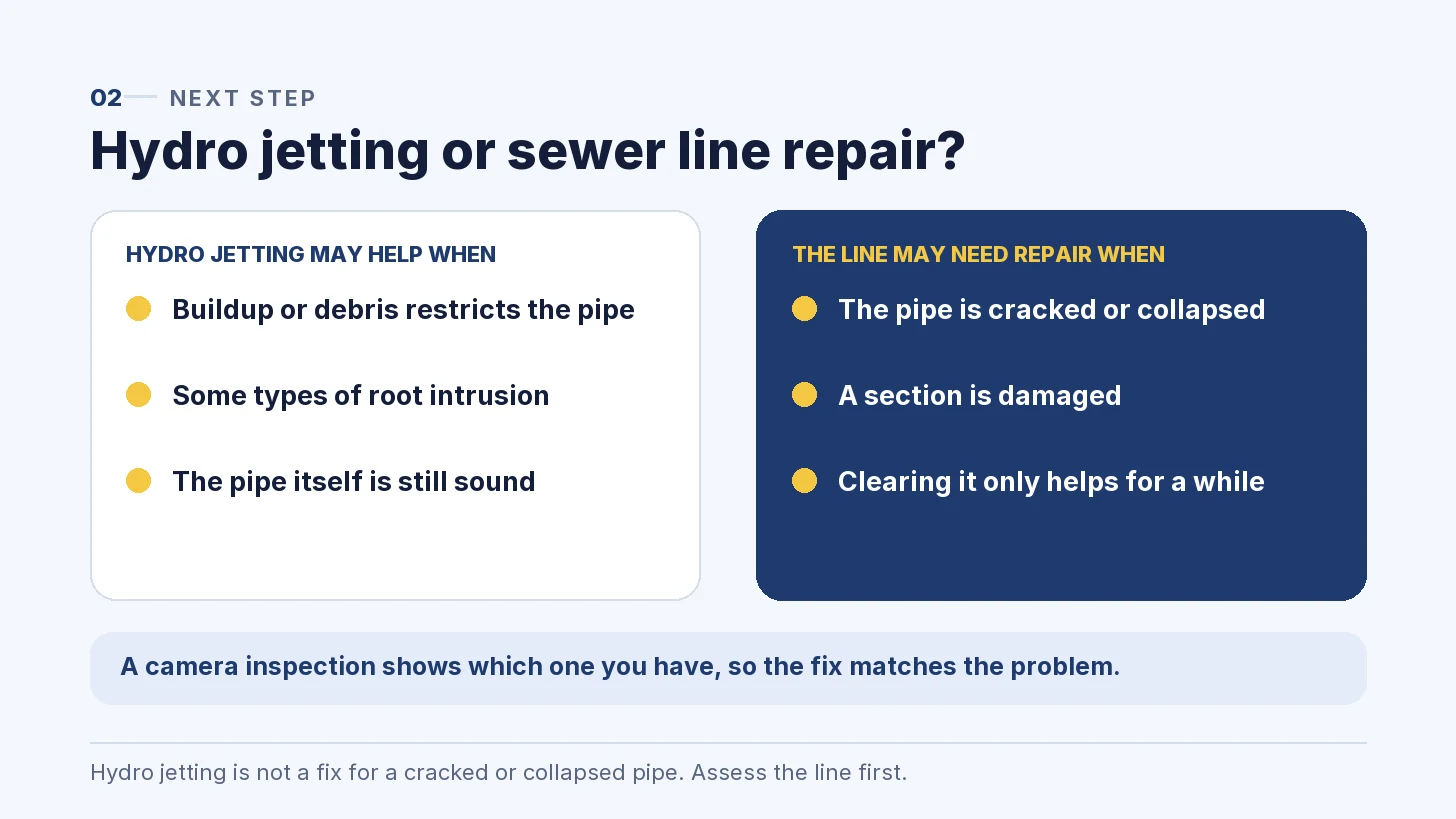
The right solution depends on what is causing the backup. Clearing a blockage and repairing a damaged pipe are two different jobs.
When hydro jetting may help
Hydro jetting uses high-pressure water to remove buildup and debris from inside a pipe. It may help when accumulated material or certain types of root intrusion restrict the line. It is not a fix for a cracked or collapsed pipe, so the condition of the line should be assessed first.
When the sewer line needs repair
If an inspection shows the pipe is cracked, collapsed, or otherwise damaged, clearing the blockage may only give temporary relief. Depending on the location and severity, the line may need a repair or replacement.
For a recurring blockage, professional drain cleaning and hydro jetting may help. If the pipe itself is damaged, sewer line repair may be the next step.
What to Do When Your Drain Backs Up During Heavy Rain
When wastewater starts coming back into the house, the first priority is limiting the damage.
- Stop using the affected fixtures. Sinks, toilets, and showers all add water to the backup.
- Skip chemical drain cleaners. They may not reach a blockage in the main line, and they create extra hazards when a plumber needs to work on the drain.
- Keep children and pets away if sewage is coming up through a floor drain, and avoid direct contact with the wastewater.
- Do not assume it fixed itself when the rain stops. The line may still be partially blocked or damaged.
When to Call a Plumber
A single slow drain may be a minor issue. A toilet that backs up when another fixture is used, several drains that stop working, or sewage coming through a basement floor drain is a different situation. If the same problem returns during every heavy rain, have the sewer line inspected before the next storm.
All Phase Plumbing helps homeowners across the Seattle area with recurring drain and sewer problems, including Seattle, Renton, Kent, Bellevue, and Tukwila. For a backup right now, our 24/7 emergency plumber line is open. Call (206) 309-1088 and we will work out what is actually causing it, so the next storm does not bring the same problem back.
Written by the All Phase Plumbing team
Licensed, insured plumbers serving Seattle, Tacoma, and the Puget Sound since 1989. We write about the problems we actually see in local homes.
Available 24/7
Need a plumber right now?
Licensed, insured Seattle plumbers since 1989. Real people answer, day or night.
(206) 309-1088Book online- Upfront pricing
- Same-day service
- Licensed & insured