


The forecast says two cold nights, maybe three. It doesn't sound like much to worry about. Then the temperature drops into the twenties, the wind picks up, and somewhere behind a wall or under the house, a pipe that has never frozen in thirty years finally does. By the next morning, water is running down through the ceiling instead of through the tap.
This is the part that catches a lot of homeowners off guard here. Seattle doesn't get weeks of hard freeze the way Minneapolis or Denver does, so most homes in King and Pierce counties were never built to handle one. Pipes run through crawl spaces and attics with little or no insulation, outdoor faucets sit exposed on the wall, and nobody thinks twice about any of it, until the one week a year it actually matters.
Here's what surprises people most: it isn't the long, steady cold that causes the damage. It's the short, sudden snap. A deep freeze that lasts two or three days gives a pipe no warning, and most homeowners haven't done a single thing to prepare for it, because it so rarely happens. Taking an hour to winterize plumbing in Seattle before the first cold front is what keeps a two-day freeze from becoming a repair bill.
What Actually Happens When a Pipe Freezes
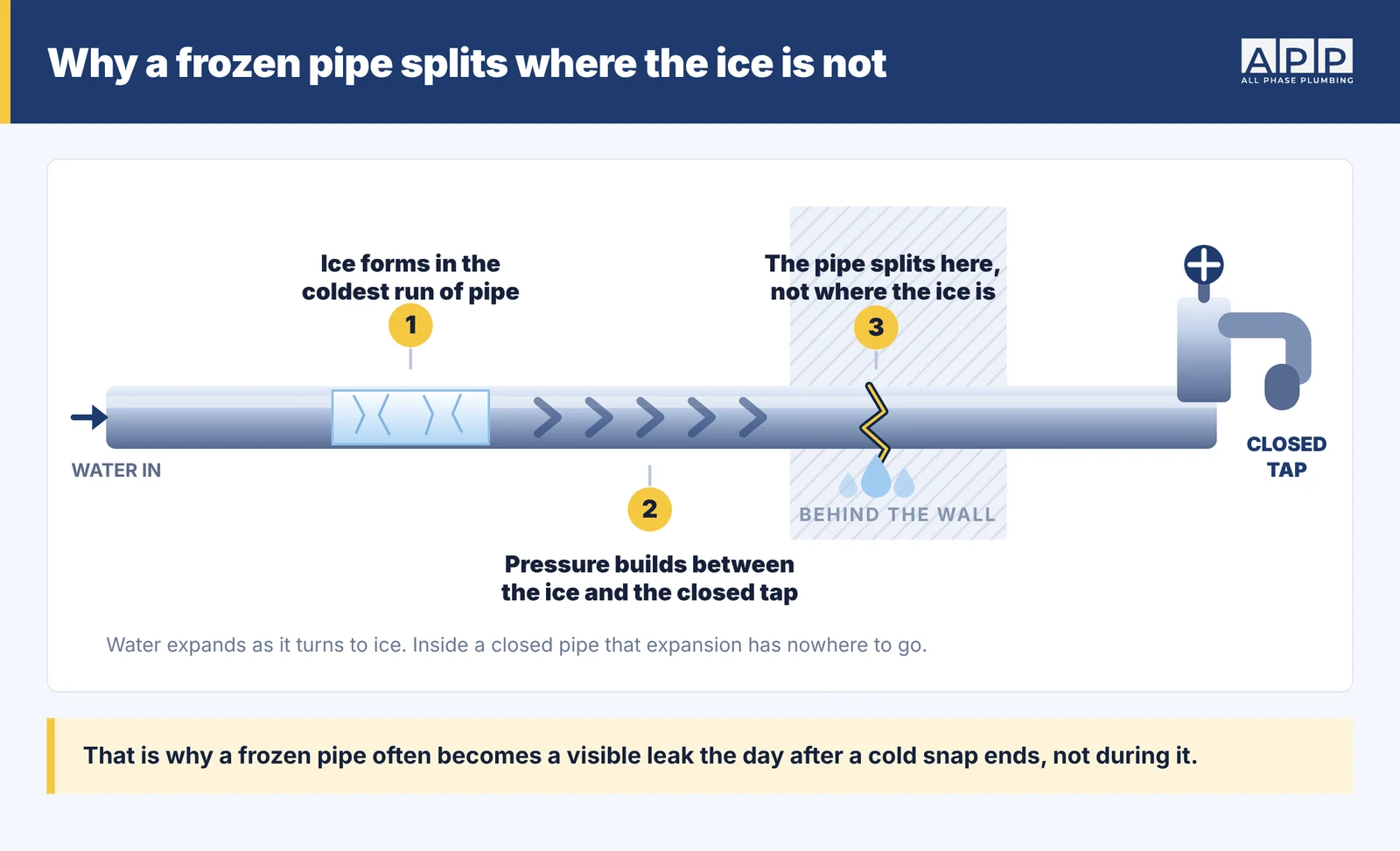
Water expands as it turns to ice. Inside a closed pipe, that expansion has nowhere to go, so pressure builds up between the ice and the nearest closed tap. The pipe usually doesn't split where the ice is. It splits somewhere else along the line, often behind a wall, where nobody sees it until the ice thaws and the water starts moving again. That's why a frozen pipe is often a bigger problem the day after the cold snap ends, not during it.
How to Winterize Plumbing in Seattle
You don't need to do much to protect a home here. A few simple steps, done before the forecast turns cold, cover almost every case:
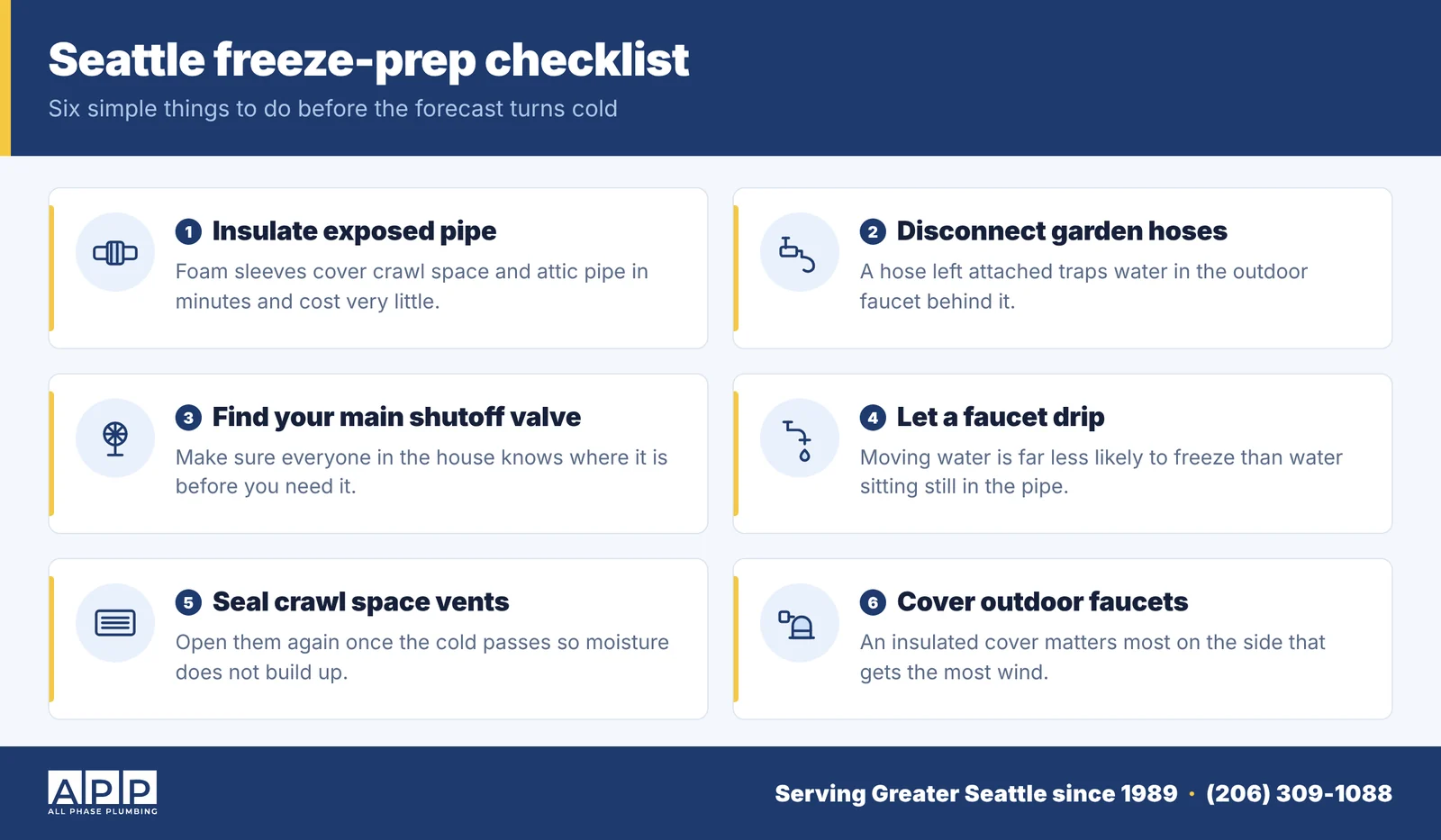
- Insulate exposed pipe. Foam pipe sleeves from any hardware store cover crawl space and attic pipe in minutes and cost very little.
- Disconnect garden hoses. A hose left attached traps water in the outdoor faucet behind it, one of the most common freeze points in this area.
- Know where your main shutoff valve is, and make sure everyone in the house does too. If a pipe does split, shutting off the water fast is what limits the damage.
- Let a faucet drip during a hard freeze. Moving water is far less likely to freeze than water sitting still in the pipe.
- Seal crawl space vents before a cold stretch, then open them again once it passes so moisture doesn't build up underneath the house.
- Protect outdoor faucets with an insulated cover, especially on the side of the house that gets the most wind.
What a Burst Pipe Actually Costs
A straightforward pipe repair, the kind where a plumber opens one section of wall and replaces the damaged piece, typically runs a few hundred dollars. The real cost almost never comes from the pipe itself. It comes from the water that got out before anyone noticed: soaked drywall, warped flooring, and in bad cases, mold remediation weeks later. That's the gap this checklist is really meant to close. A pipe sleeve that costs a few dollars is a lot cheaper than a flooded hallway.
How to Tell a Pipe Has Already Frozen
If a faucet that worked fine yesterday suddenly gives you nothing, not even a trickle, that's usually a frozen line, not a dead faucet. Leave it turned on, so you'll know the moment water starts moving again, and check nearby pipe for any bulging or a hairline crack. If you find one, shut off the main valve before it thaws completely. A pipe that's already split will only leak once the ice inside melts and the pressure behind it has somewhere to go.
When to Call a Plumber Instead of Waiting It Out
A dripping faucet or a slow trickle usually sorts itself out once the temperature climbs back up. A pipe that's already cracked, a wall that's wet, or water with nowhere obvious to shut off is a different situation, and it's worth a same-day call rather than a wait-and-see approach. The faster the water stops moving through a damaged pipe, the smaller the repair.
All Phase Plumbing has handled exactly this kind of call across Tukwila, Kent, Auburn, Federal Way, and the rest of the Seattle area since 1989, including the nights a cold snap catches everyone off guard. If a pipe has already burst, the team's burst pipe repair crews run a 24/7 emergency line and can usually be on site within 60 to 90 minutes. For pipe that's holding but clearly at risk, same-day appointments are available for insulation, pipe repair, or a shutoff valve that's hard to reach.
Call (206) 309-1088 any time, day or night, if a pipe has burst or you're not sure whether one already has.
Written by the All Phase Plumbing team
Licensed, insured plumbers serving Seattle, Tacoma, and the Puget Sound since 1989. We write about the problems we actually see in local homes.
Available 24/7
Need a plumber right now?
Licensed, insured Seattle plumbers since 1989. Real people answer, day or night.
(206) 309-1088Book online- Upfront pricing
- Same-day service
- Licensed & insured


